Géotrope/Geotrope est le nom d’une nouvelle catégorie ajoutée sur (e)space&fiction. Elle vise à décrire les tropes, ces motifs narratifs récurrents communs à de nombreuses œuvres de fiction. Le simple usage d’un géodispositif dans un récit fictionnel est en soi un trope géographique, dont rendaient compte les catégories existantes : carte, globe, GPS, etc. Avec la catégorie Géotrope/Geotrope nous nous intéressons à des tropes qui correspondent à des usages de géodispositifs particulièrement originaux et remarquables.
Geotrope is the name of a new category added to (e)space&fiction. It aims to describe tropes, those recurring narrative motifs found in many works of fiction. The mere use of a geographical apparatus in a fictional story is a geographical trope by itself, which was already covered by existing categories: map, globe, GPS, etc. With the Géotrope/Geotrope category, we focus on tropes that involve original and remarkable uses of geographical apparatuses.
Français
Tropes

Dans le domaine de la fiction, le mot anglais Trope1 désigne les éléments récurrents des récits, les motifs qui reviennent souvent, les passages obligés que l’on retrouve d’œuvre en œuvre. La notion de Trope issu du monde anglo-saxon de l’analyse des médias est assez proche du Topos, la figure de style de la rhétorique classique. Les tropes peuvent être des thèmes, des situations, des personnages archétypaux, des dynamiques relationnelles, des schémas d’intrigue ou plein d’autres choses encore…
On peut assimiler les tropes à des clichés quand leur utilisation répétitive et mécanique par une narration paresseuse les transforme en trucs éculés. Mais ces motifs communs sont importants et leur usage est nécessaire pour construire un récit compréhensible dans lequel le public peut entrer et s’orienter. Une variation originale ou inventive dans un trope contribue donc à la qualité d’une œuvre et à l’intérêt du public, même si ce dernier ne la perçoit pas toujours en tant que telle.
TV Tropes
Le site web TV Tropes est une encyclopédie états-unienne au format wiki consacrée à un inventaire foisonnant des tropes apparaissant dans la pop culture : cinéma, littérature, science-fiction, fantasy, programme télévisé, jeu vidéo, animé, manga, etc. C’est un inventaire très utile, impressionnant par l’ampleur et la richesse détaillée de son contenu, qui couvre potentiellement tous les thèmes possibles et tous les moyens d’expression. La visite de ce site est fortement conseillée, même si le système de classification fondée sur une catégorisation collaborative et spontanée qu’on appelle folksonomie est assez complexe.
Tropes géographiques
Les tropes qui nous intéressent sont bien évidement ceux qui concernent l’espace et l’information géographique. Sans les distinguer, TV Tropes en propose plusieurs exemples qui renvoient directement à l’usage fictionnel de géodispositifs inventoriés dans (e)space&fiction : la carte (Map Tropes), la navigation (Navigation Tropes), le cheminement (Pathway Tropes), la cache (Stealth Tropes) et la géolocalisation (The Longitude Problem). TV Tropes peut donc être envisagé comme un prolongement de (e)space&fiction pour explorer de nouvelles occurences de géodispositifs fictionnels.
Les catégories existantes des géodispositifs d'(e)space&fiction prennent déjà en charge les tropes cités plus haut. Cependant d’autres nous intéressent car ils renvoient à des usages plus métaphoriques ou plus généraux des géodispositifs. Il s’agit par exemple de géodispositifs détournés de leur usage habituel et dotés de pouvoirs magiques ou surnaturels comme la boussole ou la carte magiques (Magic Compass et Magic Map), d’objets communs détournés en géodispositifs comme le labyrinthe (Maze), mais aussi de cadres d’usage soit très originaux comme le géodispositif rendu paradoxalement invisible par sa mise en évidence (Map All Along) soit très partagés comme celui de la chasse au trésor (Treasure Map).
Nouvelle catégorie
Nous avons donc créé pour (e)space&fiction une catégorie générale Géotrope/Geotrope avec cinq sous-catégories dont le nom en anglais est le même que celui de TV Tropes afin de faciliter les liens entre les deux sites. Nous avons ajouté le géotrope de la carte Vaudoo proposé par Matthieu Noucher il y a longtemps, sans équivalent direct dans TV Tropes :
- Boussole Magique/Magic Compass
- Carte Magique/Magic Map
- Labyrinthe/Maze
- Carte En Evidence/Map All Along
- Carte Du Trésor/Treasure Map
- Carte Vaudou/Voodoo Map
Les liens ci-dessus conduisent aux définitions des géotrope.
La catégorie Géotrope/Geotrope a été placée avec la catégorie Diégèse/Diegesis dans une nouvelle grande catégorie Narration/Narrative pour rendre compte de la dimension langagière et narratologique de l’usage des géodispositifs dans les œuvres de fiction.
Une nécessaire recatégorisation
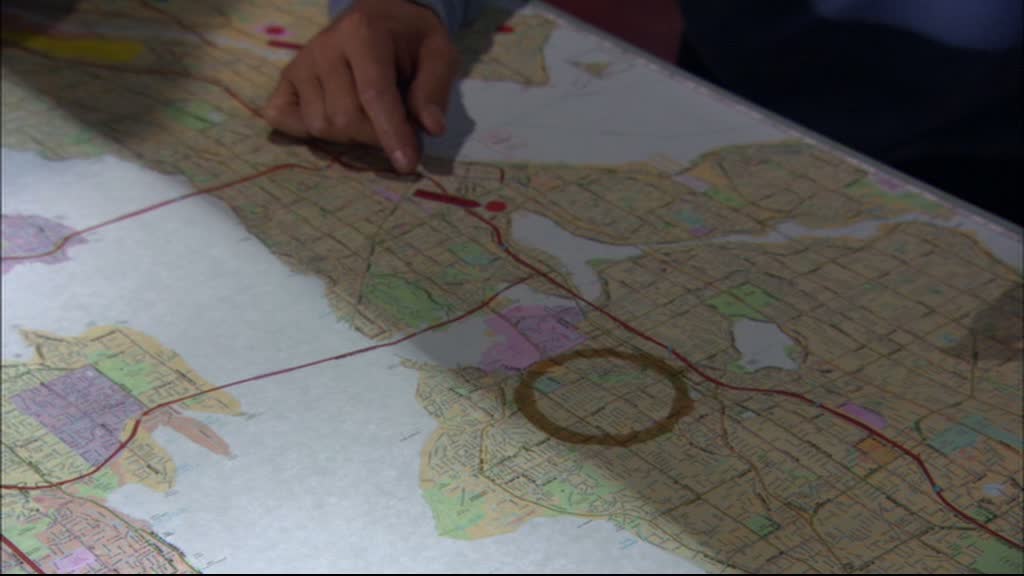
Ces nouvelles catégories de tropes géographiques vont servir à caractériser les nouveaux billets. Il faudra aussi par cohérence recatégoriser les anciens billets qui correspondent à ces géotropes. C’est un travail assez lourd qui prend du temps et de l’énergie. Les illustrations de ce billet présentent quelques exemples d’une première recatégorisation rapide.
Le caractère rhétorique des géodispositifs fictionnels
L’emploi de géodispositifs dans une œuvre gagne à être replacé sur le fond de ces figures récurrentes, ces motifs narratifs spatiaux plus ou moins convenus ou imposés qui circulent et sont partagées consciemment ou non. Ces tropes géographiques signalent la dimension métaphorique des références à l’espace dans les fictions qui sont très évidentes dans le langage courant.
Les expressions françaises : « être déboussolé », « perdre le Nord » ou « être à l’Ouest », et les expressions anglaises : « to be off the map », « to put on the map » ou « get lost! » ne renvoient pas à une désorientation géographique, mais à dimension plus générale de perte de repère psychologique ou existentielle. Les géotropes peuvent d’ailleurs souvent être rattachés à des tropes plus abstraits. Par exemple, dans TV Tropes la catégorie Map All Along (Carte En Evidence) relève du trope plus général Hidden in Plain Sight, dont La lettre volée d’Edgard Allan Poe est l’exemple emblématique2.
- https://fr.wikipedia.org/wiki/Trope_(fiction) ↩︎
- Sur ces questions lire Joliveau, Thierry, 2026. Chapitre 8. Enquête sur un imaginaire géonumérique . In : Géonumérisation et société : pratiques, imaginaires et perspectives critiques. ISTE Editions. pp. 225‑260 et, sur la question du langage,Matoré, Georges, 1962. L’espace humain: l’expression de l’espace dans la vie, la pensée, et l’art contemporains. Paris, France :La Colombe Éditions du Vieux colombier, 1962↩︎
Ce billet vous a intéressé ? Consultez les autres billets et n’hésitez pas à les partager et commenter!
English
Tropes
In the field of fiction, the English word “tropes”¹ refers to recurring elements in narratives, patterns that frequently reappear, or mandatory sequences that serve as a foundation or common ingredient in many works. The concept of “trope,” which originated in contemporary Anglo-Saxon media analysis, is quite similar to “topos,” the classical rhetorical figure of speech. Tropes can be themes, situations, archetypal characters, relational dynamics, plot structures, or many other things…
Tropes can be considered clichés when their repetitive and mechanical use in lazy narratives turns them into hackneyed tricks. But these common motifs are important, and their use is necessary to construct a comprehensible narrative that the audience can access and find their way through. An original or inventive variation on tropes therefore contributes to the quality of a work and the audience’s interest, even if the public does not always perceive it as such.
TV Tropes
The TV Tropes website is a U.S.-based wiki-style encyclopedia dedicated to a vast collection of tropes found in pop culture: film, literature, science fiction, fantasy, television shows, video games, anime, manga, and more. It is a very useful resource, impressive for the scope of its content, which potentially covers every possible theme and every form of expression. A visit is highly recommended, even though the classification system of this vast and rich site, which is based on folksonomy (a collaborative and spontaneous categorization), is relatively complex, and one can easily get lost in a labyrinth of intertwined concepts.
Geographic Tropes
The tropes we are interested in are, offcourse, those that relate to space and geographic information. TV Tropes offers several tropes that directly correspond to the geographical apparatuses cataloged in (e)space&fiction: Map Tropes, Navigation Tropes, Pathway Tropes, Stealth Tropes and geolocation Tropes (The Longitude Problem). TV Tropes can therefore be viewed as an extension of (e)space&fiction for exploring geographical apparatuses in new fictionnal works.
The existing categories of geographical apparatus in (e)space&fiction already account for the tropes mentioned above. However, we are interested in other tropes because they point to more metaphorical or general uses of geographical apparatuses. These include, for example, those diverted from their usual use and endowed with magical or supernatural powers, such as the magic compass or the magic map ; everyday objects converted into geographical apparatuses, such as the maze ; or frameworks for use that are either highly original, such as the geographical apparatus made paradoxically invisible by being placed in plain sight (Map All Along), or, conversely, very common tropes, such as a treasure hunt (Treasure Map).
So, for (e)space&fiction, we created a general “Géotrope/Geotrope” category with five subcategories whose English names are the same as those on TV Tropes to facilitate links between the two sites. We added another “geotrope” suggested by Matthieu Noucher a long time ago, which has no direct equivalent on TV Tropes:
- Boussole Magique/Magic Compass
- Carte Magique/Magic Map
- Labyrinthe/Maze
- Carte En Evidence/Map All Along
- Carte Du Trésor/Treasure Map
- Carte Vaudou/Voodoo Map
The links above lead to the definitions of geotropes.
The Géotrope/Geotrope category has been placed alongside the Diégèse/Diegesis category within a new broader category, Narration/Narrative, to capture the linguistic and narratological dimensions of the use of geographical apparatuses in works of fiction.
A Necessary Recategorization
These new categories of geographic tropes will be used to classify the new posts. For the sake of consistency, we will need to recategorize the old posts that correspond to these geotopes. This is a fairly labor-intensive task that will take time and energy. The illustrations in this post show a few examples of an initial, quick recategorization.
The rhetorical nature of fictional geographical apparatuses
The use of geographical apparatuses in a work is best understood against the backdrop of these recurring figures, these more or less conventional or imposed spatial narrative motifs that circulate and are shared, consciously or unconsciously. These geographical tropes highlight the metaphorical dimension of spatial references in fiction, which is very evident in language. French expressions such as “être déboussolé,” “perdre le Nord,” or “être à l’Ouest,” and English ones like “to be off the map,” “to put on the map,” or “get lost!” do not refer to geographical disorientation, but to a more general sense of loss, whether psychological or existential. geographical tropes can often be linked to more abstract tropes. For example, on TV Tropes, the “Map-in-Evidence” category falls under the broader trope “Hidden in Plain Sight,” of which Edgar Allan Poe’s The Purloined Letter is the iconic example.


