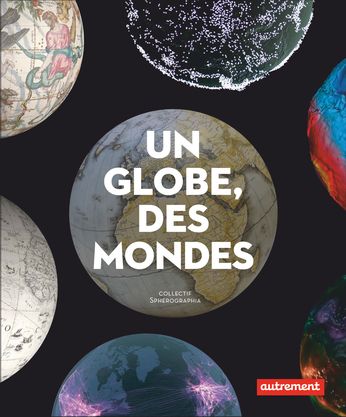
Le livre collectif du projet SPHEROGRAPHIA est paru aux éditions Autrement. Intitulé Un Globe, des mondes il fait le tour des résultats du projet Spherographia en six chapitres (plus un) très bien illustrés. Ce billet reprend des extraits de l’avant-propos et les introductions de chaque chapitre. Les premières pages du livre peuvent être feuilletées sur le site de l’éditeur : Un globe, des mondes
The collective book from the SPHEROGRAPHIA project has been published by Éditions autrement. Titled Un Globe, des mondes, it presents the results of the Spherographia project in six (plus one) beautifully illustrated chapters. This post includes excerpts from the foreword and the introductions to each chapter. The first few pages of the book can be previewed on the publisher’s website: Un globe, des mondes
- Chapitre 1 : Voir le monde
- Chapitre 2 : Explorer le monde
- Chapitre 3 : Simuler le monde
- Chapitre 4 : Revendiquer le monde
- Chapitre 5 : Raconter le monde
- Chapitre 6 : Fabriquer son monde
- A vous de jouer
- Une exposition itinérante Art/Science
Ce billet reprend des extraits de l’avant-propos et les introductions de chaque chapitre. Les premières pages du livre peuvent être feuilletées sur le site de l’éditeur : Un globe, des mondes
« Les globes, reflets d’une vision du monde, s’inscrivent dans une longue tradition de représentation de la Terre. Attributs du pouvoir dès le Moyen Âge, ils deviennent, avec les grandes explorations puis la colonisation, des condensés du savoir géographique du monde, accompagnant sa conquête par les nations européennes. D’une étonnante diversité – terrestres, célestes, parfois brodés ou sculptés – ils sont également des objets d’art à part entière, porteurs d’histoires et d’imaginaires esthétiques et mythologiques fascinants. Aujourd’hui, les globes virtuels sont omniprésents. Au cœur des débats planétaires, ils deviennent des outils pour anticiper l’avenir, mais doivent être déconstruits: les données numériques qu’ils rendent visibles ne sont pas sans failles ».
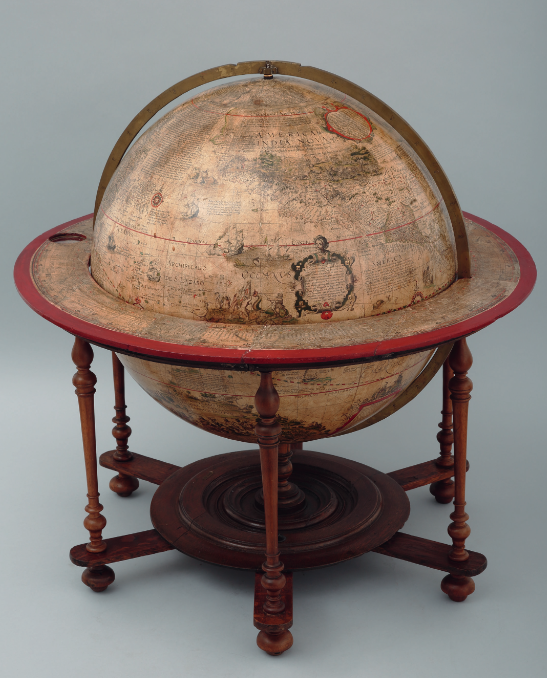
Le chapitre 1 Voir le monde rappelle que « les globes terrestres s’inscrivent dans une longue tradition de mise en spectacle du Monde. Ces représentations oscillent entre œuvres artistiques et inventaires scientifiques, entre apanages de l’autorité et archétypes de la connaissance. Avec le développement des images de la Terre vue de l’espace, et en particulier de l’imagerie satellite, les globes virtuels semblent désormais constituer la modalité de représentation du monde qui s’impose ».
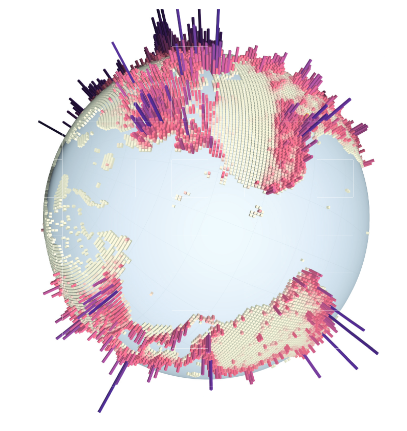
Le chapitre 2 Explorer le monde montre comment « la croissance exponentielle des données numériques sur l’environnement place les globes virtuels au cœur des débats actuels sur les changements globaux. En participant activement à la mise en spectacle et à la mise en science du Monde, ces visuels constituent des objets techniques dont le contenu, éminemment idéologique et politique, gagne à être exploré ».
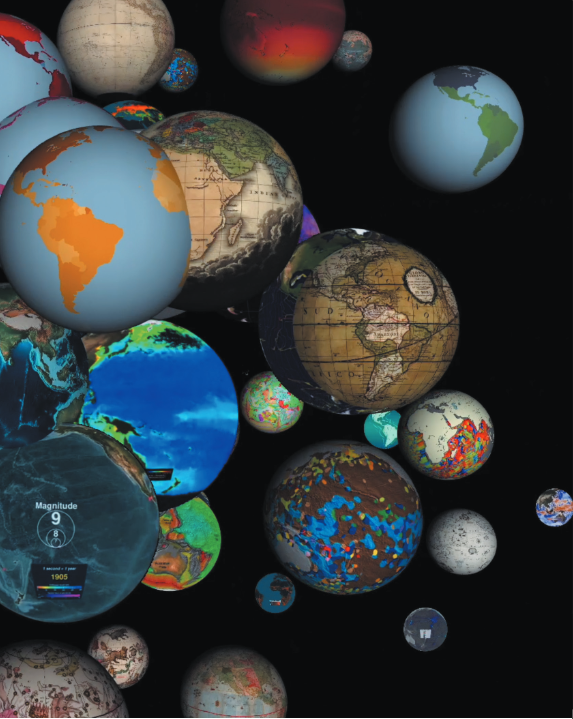
Le chapitre 3 Simuler le monde analyse les globes virtuels, dont Google Earth est le plus connu, alors que » bien d’autres inondent Internet. À partir de l’analyse d’une globothèque, véritable librairie de plus de 200 globes virtuels, on peut dresser un panorama pour expliciter comment ces différents récits (carto)graphiques tentent de simuler le Monde. En interrogeant leurs sources, le déluge de données devient simulacre, tandis que les déserts de données se révèlent. Une nouvelle forme de fracture numérique est alors mise en exergue ».
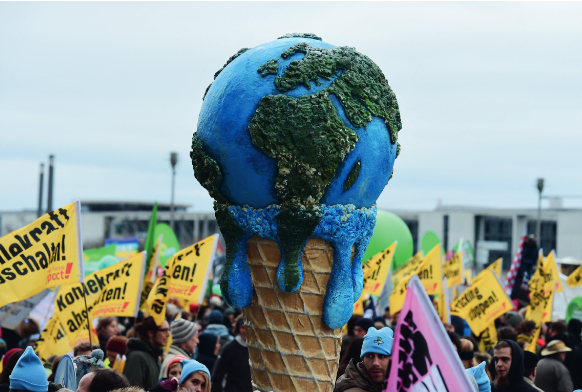
de la COP30
Le chapitre 4 Revendiquer son monde explique que « les globes s’imposent aujourd’hui comme une forme privilégiée d’une représentation totalisante du Monde et renouvellent la perspective positiviste de la cartographie, pourtant largement déconstruite. Cependant, si la Terre est une, il n’existe pas un mais des mondes, et presque autant de globes cherchant à les visibiliser, artefacts politiques contre l’inscription graphique d’un discours hégémonique sur notre planète ».
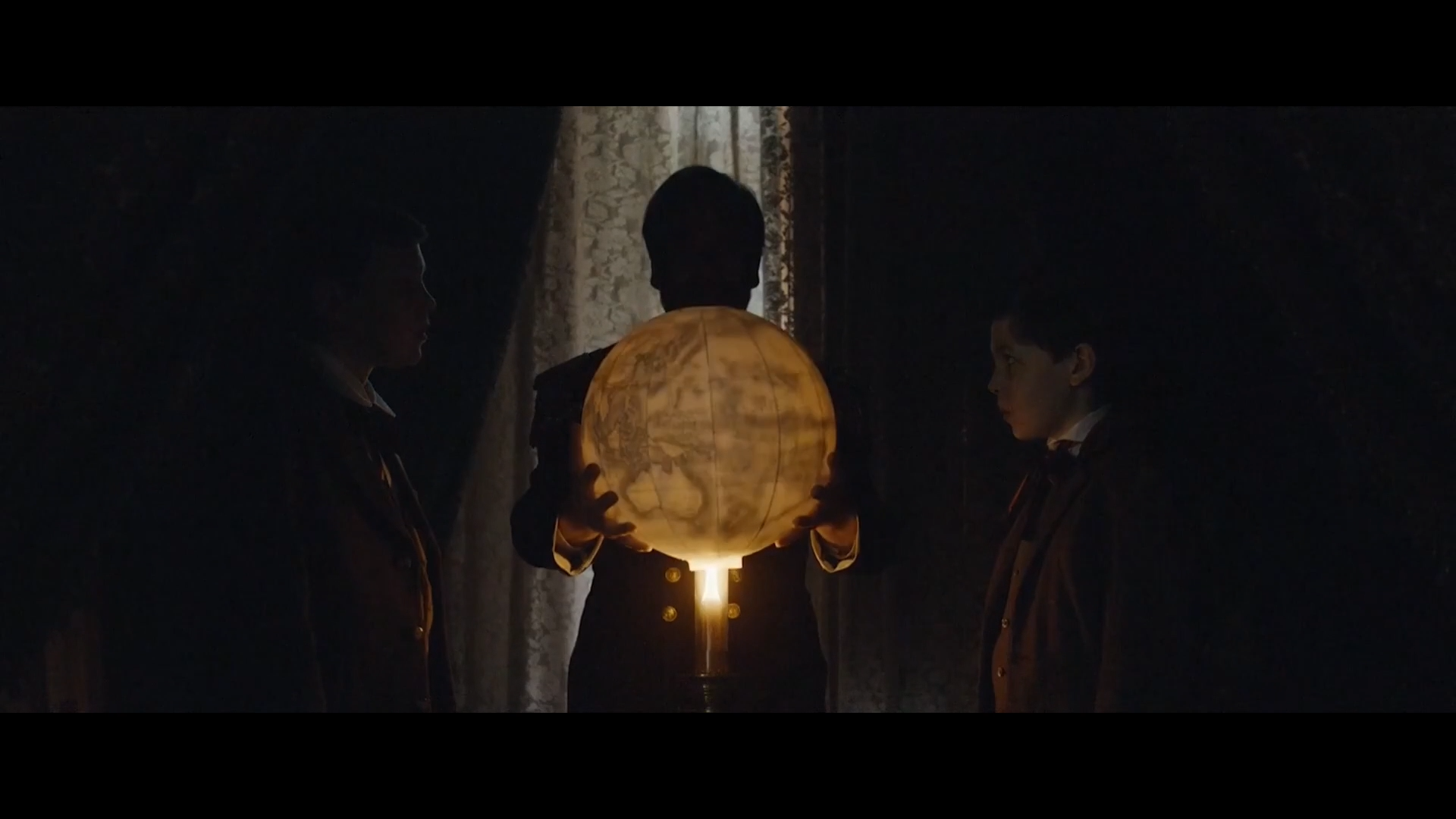
(Amundsen, 2019) Espen Sandberg
Le chapitre 5 Raconter le monde invite à partir à « la recherche des globes terrestres présents dans les œuvres fictionnelles (romans, films, peintures…) et dans les récits visant à rendre compte de situations réelles. Histoires imaginaires et récits documentaires sont peuplés de globes, matériels ou numériques, qui jouent souvent un rôle important dans la manière de raconter le monde. Il est rare que les globes soient au centre d’un récit qu’il soit fictionnel ou factuel, mais ils participent toujours à la couleur et à la richesse des récits qui les convoquent, quel que soit le domaine, pédagogique, épistémique ou politique ». Ce texte original prolonge la série des billets de la rubrique SPHEROGRAPHIA.Imaginations du présent site (e)space&fiction.
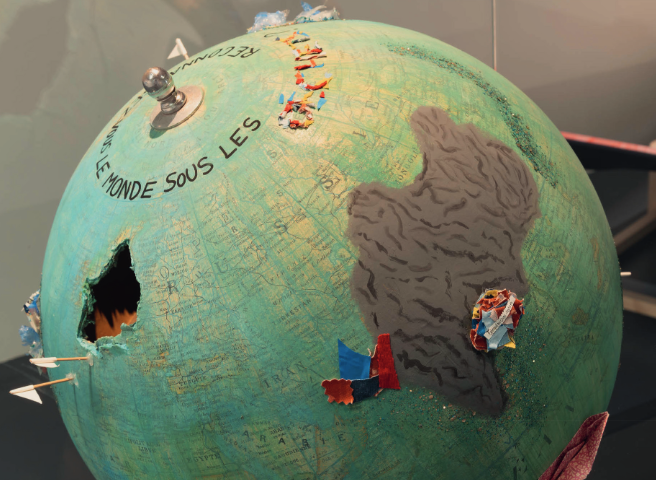
d’Aquitaine, Bordeaux, juin 2026
Avec le chapitre 6 Fabriquer son monde, il s’agit de « reprendre la main sur des représentations qui nous échappent. Ce dernier chapitre invite à se réapproprier et remanier l’objet « globe » pour tenter de « faire monde » à partir de recherches et travaux artistiques ».
La section finale A vous de jouer propose des activités de bricolage cartographique pour fabriquer des représentations en volume de la Terre qui ne sont pas sphériques et une série de QR codes pour visualiser en réalité augmentée certains des globes évoqués dans le livre.
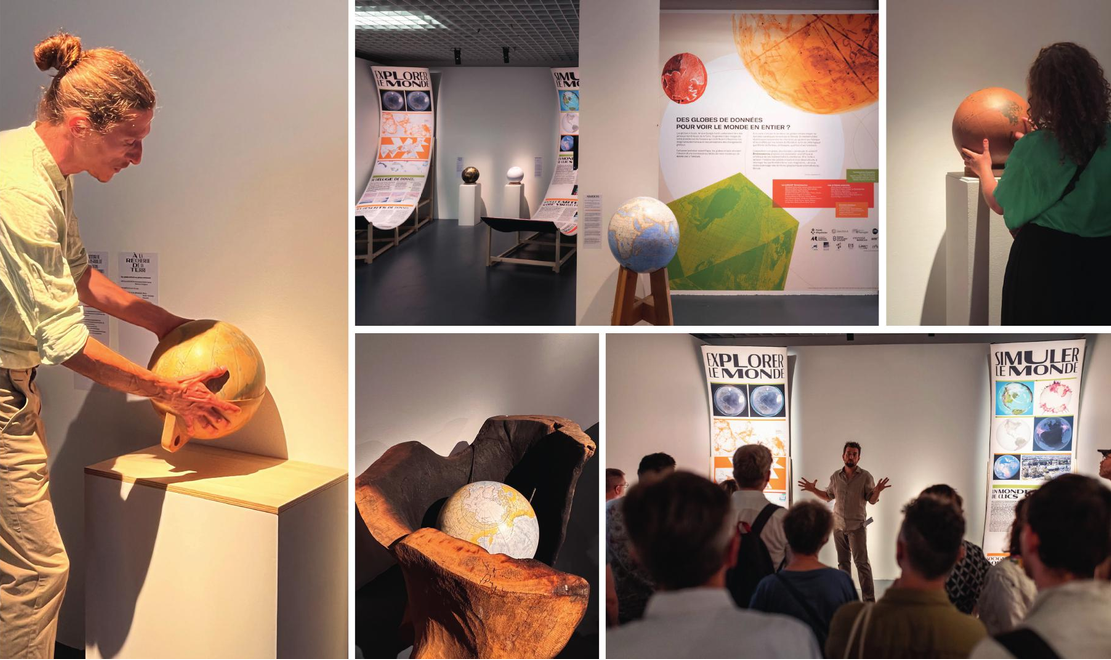
Enfin, « l’équipe du projet a intégré, dans sa démarche de recherche, une exposition itinérante Art/Science qui confronte la fabrique des globes virtuels avec des représentations artistiques (globes terrestres et célestes, broderies, vanneries, sculptures, dispositifs numériques, etc.) et initie un dialogue interculturel autour de différentes mises en récit du Monde.
La 1ère édition a eu lieu du 28 septembre au 10 décembre 2024 au Centre d’Art et de Recherche de Mana (CARMA) en Guyane. La 2ème édition s’est tenue du 11 avril au 1er juin 2025 au Centre d’Exposition de Val-d’Or (VoArt) en Abitibi-Témiscamingue, au Québec. La 3ème édition était multisites, organisée entre le 18 juin et le 12 décembre 2026, au Géodock, centre de médiation scientifique du campus de Talence/Pessac et au Musée d’Aquitaine dans le centre-ville de Bordeaux. Bien davantage que des instants de restitution des travaux menés, ces expositions ont aussi (et surtout) été des moments intenses de recherche-création. Les visites guidées, les conférences, les projections ou les ateliers, ont permis de dépayser le regard initialement porté sur cet objet, de l’enrichir d’approches complémentaires et en définitive de réinterroger les premières hypothèses du projet. ».
SPHEROGRAPHIA est un projet financé par l’Agence Nationale de la Recherche (ANR).

Ce billet vous a intéressé ?
- Consultez les billets SPHEROGRAPHIA.Imaginations
- Visitez le site du projet SPHEROGRAPHIA
- Surtout, n’hésitez pas à partager et commenter les billets !
… et pour contribuer, cliquez ici !
English
Chapter 1: Seeing the World
Chapter 2: Exploring the World
Chapter 3: Simulating the World
Chapter 4: Claiming the World
Chapter 5: Narrating the World
Chapter 6: Creating Your Own World
Now It’s Your Turn
A Traveling Art/Science Exhibition
“Globes, reflections of a worldview, are part of a long tradition of representing the Earth. Symbols of power since the Middle Ages, they became with the age of great explorations and then colonization condensed representations of geographical knowledge of the world, accompanying its conquest by European nations. Remarkably diverse, terrestrial, celestial, sometimes embroidered or sculpted, they are also works of art in their own right, bearing fascinating stories and aesthetic and mythological imaginaries. Today, virtual globes are ubiquitous. At the heart of global debates, they have become tools for anticipating the future, but they must be deconstructed: the digital data they reveal is not without flaws ».
Chapter 1, Seeing the World, notes that “globes are part of a long tradition of presenting the world as a spectacle. These representations oscillate between works of art and scientific inventories, between symbols of authority and archetypes of knowledge. With the development of images of Earth as seen from space, and in particular satellite imagery, virtual globes now seem to be emerging as the dominant mode of representing the world ».
Chapter 2, Exploring the World, shows how “the exponential growth of digital environmental data places virtual globes at the center of current debates on global change. By actively contributing to the spectacle and the scientific understanding of the world, these visual representations are technical objects whose highly ideological and political content is well worth exploring”.
Chapter 3, Simulating the World, analyzes virtual globes of which Google Earth is the best known, even as “many others flood the Internet. By analyzing a “globe library”, a veritable collection of more than 200 virtual globes, we can paint a broader picture to illustrate how these various (carto)graphic narratives attempt to simulate the world. By examining their sources, the deluge of data becomes a simulacrum, while data deserts are revealed. A new form of digital divide is thus brought to light ».
Chapter 4, Claiming One’s World, explains that “globes have come to be seen today as a preferred form of a totalizing representation of the World and revive the positivist perspective of cartography, even though that perspective has been largely deconstructed. However, while there is only one Earth, there is not just one world but many, and nearly as many globes seeking to make them visible as political artifacts that challenge the graphic representation of a hegemonic discourse on our planet ».
Chapter 5, Telling the Story of the World, invites readers to set out “in search of globes featured in works of fiction (novels, films, paintings, etc.) and in narratives that aim to depict real-life situations. Both fictional stories and documentary narratives are populated by globes, whether physical or digital, that often play an important role in how the world is portrayed. It is rare for globes to be at the center of a fictional or factual narrative, but they always contribute to the richness and vibrancy of the stories in which they appear, regardless of the field, whether educational, epistemological, or political ». This original text continues the series of posts in the SPHEROGRAPHIA.Imaginations section of this website, (e)space&fiction.
In Chapter 6, Creating Your Own World, the goal is to “regain control over representations that elude us.” This final chapter invites readers to reclaim and reimagine the “globe” as an object in an effort to “create a world” through research and artistic work.
The final section, It’s Your Turn offers hands-on cartographic activities for creating three-dimensional representations of the Earth that are not spherical, as well as a series of QR codes to view some of the globes mentioned in the book through augmented reality.
Finally, “the project team has incorporated into its research approach a traveling Art/Science exhibition that juxtaposes the creation of virtual globes with artistic representations (terrestrial and celestial globes, embroidery, basketry, sculptures, digital installations, etc.) and initiates an intercultural dialogue around different narratives of the world.”
The first edition took place from September 28 to December 10, 2024, at the Mana Center for Art and Research (CARMA) in French Guiana. The second edition was held from April 11 to June 1, 2025, at the Val-d’Or Exhibition Center (VoArt) in Abitibi-Témiscamingue, Quebec. The third edition was a multi-site event, held from June 18 to December 12, 2026, at Géodock, the science outreach center on the Talence/Pessac campus, and at the Musée d’Aquitaine in downtown Bordeaux. Far more than mere opportunities to present the work carried out, these exhibitions were also (and above all) intense moments of research-creation. Guided tours, lectures, screenings, and workshops allowed us to shift the initial perspective on this subject, enrich it with complementary approaches, and ultimately reexamine the project’s initial hypotheses ».
Found this post interesting?
- Check out the SPHEROGRAPHIA.Imagination posts
- Visit the SPHEROGRAPHIA project website
- Please feel free to share and comment!
… and to contribute, click here!
- Work Title/Titre de l’œuvre : Un globe, des mondes.
- Author/Auteur :Collectif SPHEROGRAPHIA
- Year/Année : 2026
- Field/Domaine : Livre
- Type : Essai
- Edition/Production : autrement
- Language/Langue : fr
- Geographical location/localisation géographique :
- Remarks/Notes:
- Machinery/Dispositif :
- Location in work/localisation dans l’oeuvre :
- Geographical location/localisation géographique :
- Remarks/Notes :


