Les géodispositifs au cinéma dans Mappemonde et autres déclinaisons « scientifiques » de (e)space&fiction

L’article Les géodispositifs au cinéma : l’espace mis en action qui vient de paraître dans le numéro 118 de la revue Mappemonde est une des premières traductions scientifiques « formelles » de l’activité du site (e)space&fiction /\ The paper Les géodispositifs au cinéma : l’espace mis en action just published in the issue 118 of the magazine Mappemonde is the first « formal » scientific production of the website (e)space & Fiction.

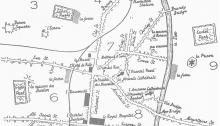
Michel Butor, la carte de L’Emploi du temps / The Map of Passing Time

Pour rendre hommage à Michel Butor, le plus géographe des écrivains, éternel nomade parti définitivement la semaine dernière, nous reproduisons la carte qu’il a dessinée en frontispice de son roman L’Emploi du temps, paru en 1956. /\ To pay tribute to Michel Butor, one of the most close to geographers among writers, this eternal nomad who left us last week, we reproduce the map he drew as a frontispiece for his novel Passing Time, published in 1956.

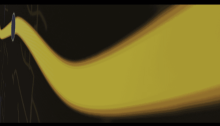
House of Cards, un cas d’épure cartographique

Un point clignotant sur une carte et se déplaçant à l’écran pour signaler qu’un individu est pisté à son insu est devenu un plan cliché des séries policières ou d’espionnage. Dans le plan final très court de l’épisode 10 de la saison 2, la série House of Card renouvèle la figure d’une manière originale. /\ A moving dot flashing on a map to signal that a person is tracked has become a cliche of crime and mystery TV series. With the short final plan of the 10th episode of the second season, House of Card proposes something new and original.

Bomb run on Kiel planning / Préparation du bombardement de Kiel

The war lover / L’homme qui aimait la guerre – Leacock

The war lover is an 1962 American film directed by Philip Leacock. The storie takes place during the Second World War, on an English air base. It focuses on captain Buzz Rickson’s personality (Steve McQueen), pilot of a B-17 called The Body, and his relationship with people and life. With his co-pilot, Lieutenant Ed Bolland (Robert Wagner),…

A Self-Made Hero / Un héros très discret. Audiard (2)

(e)space&fiction already mentioned the London Underground map that Albert Dehousse learned by heart to enhance the credibility of his false engagement in the Resistance. One can found another very brilliant sequence later in the film when the « hero » travels to Germany for a military mission. Nous avons déjà mentionné dans (e)space&fiction le dispositif de la carte du…

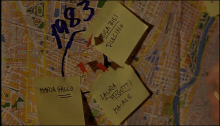
Police captain Moretti's map / La carte du Commissaire Moretti

Non ho sonno / Le sang des innocents / Sleepless – Argento

Non ho sonno (Sleepless) is  a 2001 Italian  giallo film directed by Dario Argento. Seventeen years ago, in Turin, Italia, Giacomo’s mother  was murdered. The alleged murderer was found dead and  the investigation was closed. Unfortunately, a serial killer sows again terror in a same way, leaving small paper animal figurine by the side of bodies.…

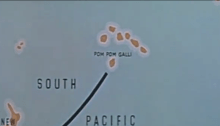
L'Atoll de Pom Pom Galli

La Classe américaine : Le Grand Détournement… cartographique – Hazanavicius et Mézerette

La Classe américaine (American Class) also known as  Le Grand Détournement is a 1993 French television film directed by Michel Hazanavicius (The Artist) and Dominique Mézerette. It is exclusively made of excerpts of old Warner’s movies (plus one extract of the French TV series Maigret). All of them are combined and dubbed with new lines.…

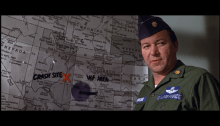
Major Manchek's map / La carte du Major Manchek

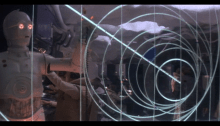
Le premier SIG du cinéma ? Le Mystère Andromède / First GIS in Cinema ? The Andromeda Strain

 The Andromeda Strain is a 1971 American science-fiction film directed by Robert Wise and based on the novel The Andromeda Strain published in 1969 by Michael Crichton. It tells the story of a four-day major American scientific crisis, in a very structured way. Many and various spatial machineries support the narration :  split screen, text…

Patrick Modiano, cartographie et vaporisation / Mapping and Vaporization

On peut qualifier Patrick Modiano, récent Nobel de Littérature, de romancier géographique.  Ses romans entrelacent d’une manière unique temps et espace dans des enquêtes à la fois pointilleuses et inabouties aux ambiances brumeuses. Les livres de Modiano sont remplis de lieux, essentiellement parisiens, d’adresses, d’itinéraires très précis, où l’on suit souvent un enquêteur croisant archives…

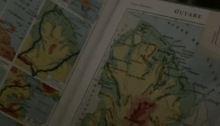
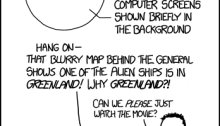
Why Greenland ? / Pourquoi le Groenland ? (source : xkcd)

A quoi je prête attention dans les films : 1) l’intrigue, les personnages (très peu) 2) les écrans d’ordinateurs qui apparaissent brièvement à l’arrière plan (principalement). « – Attends! Sur cette carte floue derrière le général on voit qu’un des vaisseaux extra-terrestres se trouve au Groenland ! Pourquoi le Groenland ? – STP, est-ce qu’on peut…

Trap Street

A trap street, or errata, is a fictitious street inserted into maps to purposefully trap potential copyright violators of the map. Normally quite innocuous, these fictitious bits of information are used as proof to spot where plagiarism has taken place. The recent chinese feature film « Trap Street » inverts the usual meaning of this expression, becoming…

« Supermap » returns ! (and « Batmap » as well…)

Superpowers might give superheroes a very specific experience of space. Some examples of spatial machineries in comic books and movies confirm this idea. The superheroes are often confronted with original cartographic issues and often invent very precursory geospatial devices. So here are already Supermap and Batmap, before possibly, if you dig into your old Marvel magazines to find…

« Village », Séverine Hubard temporary exhibition in Strasbourg

The French artist Séverine Hubard (born in 1977) present at the Musée d’Art Moderne et Contemporain de Strasbourg (MAMCS) a temporary exhibition called Village. Work specially made for MAMCS, Village consists of an assembly of 18 « huts », mainly in wood and metal, hung together. This monumental work is eleven meters high. Installed in the external…

Ward de Frédéric Werst : le pays imaginaire des Wards/ Ward by Frédéric Werst : the imaginary country of Wards

Ward Ie-IIe siècle et  Ward IIIe siècle are two books by French author Frédéric Werst, published respectively in 2011 and 2014. Born in 1970, Frédéric Werst is associate letters. He teaches in a high school in Paris. « By love of literature », the author has invented a new language, Wardwesân, rich more than 10,000 words. This…

Napoléon : la polyvision d’Abel Gance/ Abel Gance’s Polyvision

In 1925, Abel Gance was the first director to use three cameras for shooting his movie Napoleon. By the juxtaposition of the  three images he obtained a very large screen, three times the traditional format. This process, called « Polyvision », allows to increase not only the area shown by the images, but also to multiply the…

« Jeux vidéo l’EXPO » à la Cité Universcience à Paris/Exhibition « Jeux vidéo l’EXPO » at Cité Universcience in Paris

Between 22 October 2013 and 24 August 2014, the Cité Universcience (Cité des Sciences et de l’Industrie) offers exhibition « Jeu vidéo l’EXPO » on a surface of 1000 m². This is the first major exhibition in France on video games, bringing their world a renewed look. Entre le 22 octobre 2013 et le 24 août 2014,…

Let me guess. You’re the hot sauce ? Map, Power and Desire in Weeds

We have gems in our « Cabinet of curiosities » that deserve some comments. This cartographic scene from the season 4 of the politically incorrect series Weeds is one of them. This is a prelude to the love affair between the valiant mum, Nancy Botwin, trafficking cannabis to support her family and the powerful and dangerous Mexican…

Till Roeskens’ Videomappings / Les vidéocartographies de Till Roeskens

All works of the artist Till Roeskens proceed  at the beginning from geography. When he chooses to use maps or landscape views, this is less for their aesthetic quality as for their primary function: restoring the form and the arrangement of space. But Till Roeskens always place « at man’s reach », i.e. at the level of…